• About
  • THE BEADY EYE SAY’S : THE EUROPEAN UNION SHOULD THANK ENGLAND FOR ITS IN OR OUT REFERENDUM.

bobdillon33blog

~ Free Thinker.

bobdillon33blog

Category Archives: Technology

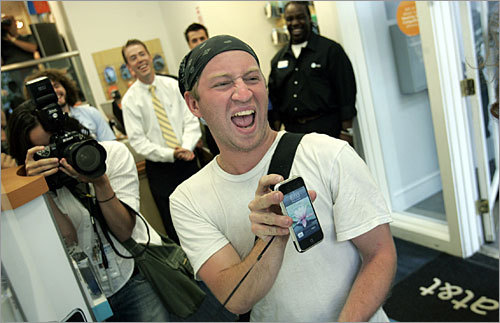
Constantly Connected Impacts Our Lives. After humans , the Smartphone

12 Thursday Mar 2015

Posted by bobdillon33@gmail.com in Technology, Uncategorized

≈ Comments Off on Constantly Connected Impacts Our Lives. After humans , the Smartphone

Tags

Big Data, Internet, Smart Phone., Society, Technology

Right, this is the last post on the subject of what is shaping our technology driven Society.

We are living in a world that relies on data communications.

It is hard to think of any tool, any instrument, any object in history with which so many developed so close a relationship so quickly as we have with our phones.

The Mobil Phone/Cell phone/I phone what ever you wish to call it has evolved into the Smart Phone. > voice and text services, cameras, alarm clock, and radio, access to the internet> all of which will be on your wrist shortly > Apple Smart Watch.

1 in 4 people check it every 30 minutes, 1 in 5 every 10 minutes.

There are almost as many mobile subscriptions (6.8 billion) as there are people in the world (7.1 billion)

I start this post by saying there is no argument when it comes to positive benefits to Society, that the mobile phone has contributed more to the individual than the Internet or Big Data has done to date.

On the other hand I believe it has also contributed to : The mess we have on our hands, to spreading the inequalities of the world, to fueling terrorist Organisations, to spreading non-thrusts, to making today, now it’s tomorrow, and to leading us to expect more from Technology and Less from Each Other.   

The Mobil Phone has become an indispensable feature of technology that is rapidly changing the face of communication not only in the most remote areas of the world but also the family structures of the world.

Returning to an Individual and an overall view:

Mobile phones are helping under served populations access the critical skills and empowering information they need to make informed decisions for themselves and their families, and move toward economic self-sufficiency.

They have done more than all the Aid given to Africa and beyond. In fact they are being used to facilitate and promote economic development and growth.

They reduce search costs and increase information availability, which makes markets function more efficiently.

In terms of the diffusion of ideas and knowledge, mobile phones make available information about market prices and employment.

The people who are growing your food, making your clothes, and assembling your electronic devices are often poor, low-wage workers around the world who don’t have Internet access. The way we are able to connect with them is through mobile,” it provides workers with a voice — individually and collectively — by having an anonymous tool to provide feedback.

But we’re also learning that organizations — large, for-profit corporations and small, nonprofit social enterprises alike — are using mobile technology to operate better and smarter. Organizations are using mobile phones to gather real-time data that help them make informed business decisions and that yield social impacts.

But what effect are they having on Society as a whole.

Smart phones have brought a whole new meaning to the term multitasking.

Smart phones are changing the way that people interact with each other, allowing the users to be in a conversation without showing their personal expressions. As a result, we are beginning to lose the face-to-face contact that was such an important part of our lives in the past. The need to belong.

They provide farmers with information on market prices and weather reports, and they link micro and small entrepreneurs to markets and potential buyers. And, they provide mothers with important information to keep themselves and their children healthy.

Just look at

Taro Works, a mobile enabled tool with a cloud-based back-end. In non-tech lingo, this means field-based workers can gather and submit data through a mobile phone, providing real-time intelligence to their home offices. One organization using Taro Works is Honey Care Africa, a social enterprise that promotes sustainable beekeeping and economic development by providing micro finance, training, and other services to bee farmers.

Vision Spring is another social enterprise that uses Taro Works for better business and social impact. Vision Spring fights poverty by selling affordable eyeglasses to the poor, enabling them to work and learn. Why reading glasses? Studies of the economic impact of reading glasses in India showed a 35% increase in individual productivity and 20 percent increase in individual monthly income.

We knew there is great potential for mobile phones. But how to approach the issue of development using mobile technologies, remains contentious. In conjunction with Big Data, the Internet, their impact on economic development and growth are numerous.

There is no doubting their ability of time-saving capabilities/conveyance or getting assistance in an emergency. Therefore, smart phone is an important device which people cannot leave home without it.  A social necessity that we teens and adults, cannot be without, an addiction.

It would make uninteresting reading to list all the possibility of Mobil usages.

There are a few to high light how they are changing our world and could be used to change it further.

Before the appearance of the smart phone; it was impossible to shop online during lunch time without a PC or laptop. However, with the support of smart phones, shopping online in these days is as easy as making a phone call.

Services to transfer money can also help counter human trafficking, crime.

Services/Apps have changed the way healthcare is delivered globally, with the potential to provide individuals with an unprecedented amount of access to health resources.

Mobile phones eliminates the need for clients to spend time traveling to the physical banks, enabling greater access to capital, which facilitates investment and productivity.

Services to conduct Surveys, to Petition government. To impose Western ideals and culture upon other nations, resulting in a “practical elitism, but smart phones also emit radiation which some believe may be harmful to human health.

The growth of the cell phone industry itself, adding more jobs and creating more demand for products and services is another way in which mobile phones have contributed to economic growth.

Recent studies show that radiation from mobile phones are interfering with navigation system of bees and causing them to lose their way back to their hive.  As a result of this their colonies are collapsing.

Cell phones have led to social evils such as ‘sexting’, harassment and bullying of teens, in addition to creating less unity with families and friends.

Social interaction does not lead to greater concern for others, and in fact may have the opposite effect of reducing concern for others, leading to decreased pro social behavior. Eroding people’s ability to write sentences that communicate real meaning and inhibit the art of dialogue resulting in a negative impact on people’s interpersonal skills. The next generation (or so) is not going to ever be able to connect with another person, confront someone, or talk to someone face to face.

Trans formative tool for Science, Research, Surveys.

And how much about our lives and work and relationships is left to be completely transformed as a result? is anyone’s guess.

Conclusion: 

For me all three ( Internet, Big Data, Smart Phones) are all connected to each other.

You will see from previous posts that I advocate that the power of Mobil phones as a lobbing force is untapped.  It could be used to force the United nations to pass a people’s resolution to place a 0.05% aid commission on all electronic trading on the world stock exchanges. ( See previous posts.)

We hear more and more communication, but less and less to communicate.

Half human, half machine almost god, this new link in the evolution will continue its exploration beyond the enclosure of time and space. Fortunately there are, not that our smartphones are intelligent.

R. Laing  already wrote in 1967: “The machines have become more and more able to communicate with each other as humans.

If we want a world that is more equal, access to information should be universal – it should not be limited to the privileged groups in a society, but available to all of us including the impoverished.

So what will be their future applications.  Feel free to add to my list.

Brain training.

iPod Finger, Smart Phone Finger, insurance will become big business.

Increase literacy.


Suddenly my smartphone vibrates mystique.

“The digital revolution is over, the digital won!  Because the more you consume, the more it abounds. The more stores, the more it circulates. The more you distribute, the more it flows.

← Back

Thank you for your response. ✨


Cell phones can also be used to deliver important information about health and to


Share this:

  • Share on WhatsApp (Opens in new window) WhatsApp
  • More
  • Share on Mastodon (Opens in new window) Mastodon

Where has the Present gone?

06 Friday Mar 2015

Posted by bobdillon33@gmail.com in Technology

≈ Comments Off on Where has the Present gone?

Tags

Big Data, Human society, Internet, The Internet of Things, Visions of the future.

We are the first humans to live in the future.

In my last post ” You are not a Gadget. Yet ” I attempted to outline how society is being reinvented by the internet, our connected devices – the internet of things.

You might not agree that they are having an effect. If not, you need to wake up.

As in all moments of major technological change, people, companies, and institutions feel the depth of the change, but they are often overwhelmed by it, out of sheer ignorance of its effects.

The Internet, as all technologies, does not produce effects by itself it is the storage of Data that will shape the future. 

Big Data is used almost anywhere these days; A vast subject- from news articles to professional magazines, from tweets to YouTube videos and blog discussions, impacting across virtually all academic disciplines.

Every minute of your existence is being stored and this vast storage is the most relevant subject of our times. DATA NOW STREAM from our daily life:

Today, machines seem to get better every day at digesting vast gulps of information from phones and credit cards and televisions and computers; from the infrastructure of cities; from sensor-equipped buildings, trains, buses, planes, bridges, and factories, you name it —

And they remain as emotionally inert as ever.       But for how long.

It is estimated that if all the data used in the world today were written to CD-ROMs and the CD-ROMs piled up in a single stack, the stack would stretch all the way from the Earth to the Moon and a quarter of the way back again.

The data flow so fast that the total accumulation of the past two years—a zettabyte—dwarfs the prior record of human civilization.

A report by the International Data Corporation in 2010 estimated that by the year 2020 there will be 35 Zettabytes (ZB) of digital data created per year.

All of what we do today leaves a digital trail:

Every bit of that information is being stored—but by whom? for what?

The US alone is home to 898 exabytes (1 EB = 1 billion gigabytes)—nearly a third of the global total.

Kilobyte     1,000 bytes

Megabyte  1,000,000 bytes

Gigabyte  1,000,000,000 bytes

Terabyte  1,000,000,000,000 bytes

Petabyte   1,000,000,000,000,000 bytes

Exabyte    1,000,000,000,000,000,000 bytes

Zettabyte   1,000,000,000,000,000,000,000 bytes

Yottabyte    1,000,000,000,000,000,000,000,000 bytes

Just in case you have no concept of a byte.  A byte is a sequence of 8 bits (enough to represent one alphanumeric character) processed as a single unit of information. A single letter or character would use one byte of memory (8 bits), two characters would use two bytes (16 bits).

So you would want to be certified to think that Society as we know it is not a changing. 

The question is:  What is all of this information going to produce.

There is already an algorithm to detect when women were pregnant by tracking purchases of items such as unscented lotions—and offered special discounts and coupons to those valuable patrons. To plunder the Stock Exchange/Foreign Exchange. (See previous Posts)

Credit-card companies have found unusual associations in the course of mining data to evaluate the risk of default: people who buy anti-scuff pads for their furniture, for example, are highly likely to make their payments.

They are trained computers to identify deep patterns in vocal pitch, rhythm, and intensity; their software can scan a conversation between a woman and a child and determine if the woman is a mother, whether she is looking the child in the eye, whether she is angry or frustrated or joyful.

Other machines can measure sentiment by assessing the arrangement of our words, or by reading our gestures. Still others can do so from facial expressions.

Before you think about anything it has already being done. Good bye to the Present.

Big data is not just about helping an organization be more successful – to market more effectively or improve business operations. It reaches to far more socially significant issues as well. It is transforming science, engineering, medicine, healthcare, finance, business, and ultimately society itself.

The first full human genome sequence took five to 15 years to complete, and cost $1 billion to $3 billion. Now a genome sequence takes a little more than 24 hours and costs about $1,000.

NASA receives over 4 TB of new Earth Science data each day.

It Uses THE SHADOW Internet THAT’S 100 TIMES FASTER THAN GOOGLE FIBER.

Like me you problem never hear of it and will never get to use it.

Google's data centre in Douglas Country, Georgia: The amount of data held by the internet giant means there may soon need to be a new number created to measure the quantity

So what am I exactly trying to say here.

I suppose the best starting point is the Human Brain.

Your brain is home to around 100 billion neurons, all of which are perpetually establishing and breaking connections, known as synapses, with other neurons.

There are trillions of these connections throughout your brain helping orchestrate everything from movement, to learning, to establishing and recalling memories. Just to give you some perspective on the storage capacity of your brain: It has a storage capacity of some estimates come in as low as 1 terabyte, or approximately 1,000 gigabytes.

You can easily buy a 1 gigabyte USB drive for under £15. A gigabyte is 1000 megabytes, so that means you’ve got three brains right there.

For comparison, if your brain worked like a digital video recorder in a television, 2.5 petabytes would be enough to hold three million hours of TV shows. You would have to leave the TV running continuously for more than 300 years to use up all that storage.

Now consider this:

A sweet little external hard drive can give you an entire terabyte of memory for about £70. That’s 1000 gigabytes, and roughly 3333 human brains. So for £70 bucks, you could store 3333 people’s brains in your backpack.  Nice!

If you want to back up your brain and upload it to a cylon body, IBM’s “neurosynaptic” chips are the closest thing to a synthetic brain yet.

Also, consider this:

A typical 3-minute song takes up about 5 megabytes of space. So that means your brain, can hold about 60 songs.

A computer chip that emulates the human brain - and might one day replace it

Now don’t get me wrong I acknowledge that every major scientific revolution has been driven by one thing, and that is data.

Data is pouring in from every conceivable direction: from operational and transactional systems, from scanning and facilities management systems, from inbound and outbound customer contact points, from mobile media and the Web.

Organizations are inundated with data – terabytes and petabytes of it. According to IDC, “In 2011, the amount of information created and replicated will surpass 1.8 zettabytes (1.8 trillion gigabytes), growing by a factor of nine in just five years.

That’s nearly as many bits of information in the digital universe as stars in the physical universe.

I have nothing against the collection of Data nor with sharing the data, which ultimately could improve the lives of the millions of people who are generating it—and the societies in which they are living – to provide a beneficial impact on society as a whole.

The potential for doing good is perhaps nowhere greater than in public health and medicine, fields in which, “People are literally dying every day” simply because data are not being shared.

There are over 200 satellites in orbit continuously collecting data about the atmosphere and the land, ocean and ice surfaces of planet Earth which might save us from Climate Change.

Some of this data is held in transactional data stores – the byproduct of fast-growing online activity. Machine-to-machine interactions, such as metering, call detail records, environmental sensing and RFID systems, generate their own tidal waves of data.  All these forms of data are expanding, and that is coupled with fast-growing streams of unstructured and semi structured data from social media.“

The challenges facing big data today and going forward including, but not limited to: data capture and storage; search, sharing, and analytics; big data technologies; data visualization; architectures for massively parallel processing; data mining tools and techniques; machine learning algorithms for big data; cloud computing platforms; distributed file systems and databases; and scalable storage systems.

In bio medicine the Human Genome Project is determining the sequences of the three billion chemical base pairs that make up human DNA.

Big Data is further expected to add more than €250 billion a year to the European public sector administration. Thus, the whole European Union could benefit from the cumulative financial and social impact of Big Data.

One clear example of Big Data is the Square Kilometer Array (SKA) (www.skatelescope.org) planned to be constructed in South Africa and Australia. When the SKA is completed in 2024 it will produce in excess of one exabyte of raw data per day (1 exabyte = 1018 bytes), which is more than the entire daily internet traffic at present.

Another example of Big Data is the Large Hadron Collider, at the European Organisation for Nuclear Research (CERN), which has 150 million sensors and is creating 22 petabytes of data in 2012 (1 Petabyte = 1015 bytes).

Smart cities, data gathered by sensors integrated with transport data, financial transactions, location of users, social network interaction will provide an entirely new dimension to thinking about how cities function.

These three examples are only scratching the surface.

Google almost certainly has more data storage capacity than any other organization on Earth. Their biggest data centers cost half a billion to a billion dollars, so they can’t have more than 20 or so of those. These are the storage centers we know about.

  1. Berkeley County, South Carolina
  2. Council Bluffs, Iowa
  3. Atlanta, Georgia
  4. Mayes County, Oklahoma
  5. Lenoir, North Carolina
  6. The Dalles, Oregon
  7. Hong Kong
  8. Singapore
  9. Taiwan
  10. Hamina, Finland
  11. St Ghislain, Belgium
  12. Dublin, Ireland
  13. Quilicura, Chilie
  14. Eemshaven, Netherlands
  15. Groningen, Netherlands
  16. Budapest, Hungary
  17. Wrocław, Poland
  18. Reston, Virginia
  19. Additional sites near Atlanta, Georgia

In 2010, they were operating around a million servers, with close to 10 exabytes of active storage attached to running clusters. Google has a hard drive die every few minutes.

Let’s assume Google has a storage capacity of 15 exabytes, or 15,000,000,000,000,000,000 bytes.

  • Amazon (They’re huge, but probably not as big as Google.)
  • Facebook (They’re on the right scale and growing fast, but still playing catch-up.)
  • Microsoft (They have a million servers, although no one seems sure why.)

However, it’s nothing compared to the ridiculous claims by some news reports about the NSA datacenter in Utah. This facility could hold “between an exabyte and a yottabyte” of data.Microsoft data center

Apple tends to make between three and five times as much revenue as Google does. Whether it is Apple or Google at the top of the heap, you cannot deny that they are both building platforms and business models that will shape the next decade in the tech industry.

Computing is definitely moving to the cloud, and Microsoft, Google, and Amazon are all in it to win it by manipulate us all.

Because the shifts in both the amount and potential of today’s data are so epic, businesses require more than simple, incremental advances in the way they manage information.

Public Sector Information (PSI) is the single largest source of information in Europe. Its estimated market value is €32 billion.

The value of Big Data to the UK economy alone, being £216 billion and 58,000
jobs in the next 5 years.

Data traffic is expected to grow to 10.8 Exabyte per month by 2016.

Could we have foreseen the mortgage meltdown, the financial institution crisis and the recession, if only we had gotten our arms around more data and done more to correlate it?

Could we trim millions of dollars in fraud from government programs and financial markets?

But big data wants more.

Not satisfied with seeing everything about everybody it wants to store your spoken words which for thousands and thousands of year were private and should remain private.

For us to allow or turn a blind eye to this kind of monitoring and storage would be the first steps to towards slavery.  

Such a move by Governments under the cloud of spotting terrorists plots is a form of terrorism on free speech.  All Smart Phone should be be encrypt to ensure the freedom of mankind.

So I will leave you with this.

Modern science demands the use and understanding of numerical methods.

Data is like an object approaching a fixed point. It is travelling at a constant speed, such that, after one second, the distance is halved: after 1.5 seconds, the distance is halved again; after 1.75 seconds, it is halved again and so on. So data will never actually reach the fixed point, because with each fraction of a second it only halves the distance remaining.  Both the Data and the distance can theoretically be split infinitely.

Big Data technologies to analyse and properly compare disperse and huge data sets would provide huge benefits in terms of discoveries in experimental sciences.

And you think you live in the Present- think again.

Exabytes, zettabytes and yottabytes definitely are on the horizon.

But tell me where is hindsight located? Only then we will be able to cut through the myths surrounding the key technology of our time.

No single person can make sense of what a billion other people are saying. The best way to Safeguard personal data is not to give it in the first place.

← Back

Thank you for your response. ✨

Share this:

  • Share on WhatsApp (Opens in new window) WhatsApp
  • More
  • Share on Mastodon (Opens in new window) Mastodon

The Internet is dissolving National borders. Are we heading towards Electronic Governance

23 Monday Feb 2015

Posted by bobdillon33@gmail.com in Technology

≈ Comments Off on The Internet is dissolving National borders. Are we heading towards Electronic Governance

Tags

E Government., TECHNOLOGICAL ADVANCEMENT, The Internet.

I have a feeling that this post will require more than one visit to the keyboard.

Sorry this is rather a long-winded post.

As technology is influencing every aspect of living the problem is where to start.

I am at this very minute using technology that is advancing at such a rate it seems to have control over our lives. So let’s start by saying that I am not against Technology but I don’t want to end up with my Fridge controlling my Life. (Previous Post on Technology)

In this post I want to look at the effects of Technology on Society in general. The impact of technology on human behavior.

As the barriers to information come down, we are all already living longer, eating, drinking, going about our business differently with totally complacency as to the effects it is having or will have on our lives.

The impact of technology on society is deep. It is both positive and negative.

Is it now the principal driving force of society, determining societies mode of operation?  I would not say yes, however we are fast coming to the point of no return.  We need to protect ourselves from its negative and predatory influences before it’s too late.

The meanings assigned to technologies are determined by the norms and values of social groups which draw on the “wider context” of sociocultural and political environment.

The heterogeneous and hierarchical community of technological development functions as a mediator of social values and forces value orientation in society to change. They bring new technological constructs or their complete generation to life.

For example;

Capital mobility has increased incredibly, the economy has shifted to the service sector, innovation has become the primary source of productivity growth in relation to engineering, organizations, institutions as well as individual workers. The “technical construction of society” has become a major issue, that is social processes are mainly mediated by technological development.

The nature of economic competition has been undergoing huge changes, as more and more people think that there have been profound changes in the relation between economy and society and innovation requirements.

People start moving on a different time scale, time has been speeded up. Space has become globalized, by turning into more unified and more complex at the same time. The society’s level of being informed, with exploiting the opportunities provided by information and communication technology, has been increased dramatically.

Socio-economic processes create new virtual spaces or even real spaces are modified: the processes are arranged in new ways in the interacting local, regional, national and supranational spaces. While integration processes are considered to be a general tendency, clear attempts for isolation also appear repeatedly.

Knowledge has become the main economic source, and learning abilities and skills have become a criterion of adaptation at the levels of individuals, companies, local communities, nations, supranational organizations and the world taken as a global system.

As the internet dissolves national borders how will we help indigenous cultures co-exist with an increasingly homogenous global culture?

The internet is stripping the world of privacy. More and more people store personal information on the internet, how will we ensure that information is kept secret?

It is causing massive changes to;

Social/Isolation/Social Skills/Obesity/Depression/Sleep Habits/E Waste/Cyber-bullying/Deceit/Reality/Stress/Social Boundaries/Sexual Boundaries/Social Bonds/Distraction/Attention Span /Addiction/Lack of Empathy/Violence/Energy Consumption/Neurosis.

People fail to realize that technology is the root cause of many of our modern troubles;

The current financial crisis might not of happened but for Technology. Internet gambling has become an addiction for many. Uncontrolled Porn is debasing us all. The development of smart weapons.

I believe that people have too readily embraced technology, seeking only the benefits, and ignoring the many downfalls.

The excessive use of machines in every field can result in an under-utilization of human brains. Over time, we may even lose our intellectual abilities. You know of the declining mathematical abilities in children due to use of calculators since school, don’t you?

Where is the digital divide going to take us? How is our ‘tomorrow’ going to be?

It has made life easy, but so easy that it may lose its charm one day. One can cherish an accomplishment only if it comes after effort. But everything has become so easily available due to technology that it has lost its value. There is a certain kind of enjoyment in achieving things after striving for them. But with everything a few clicks away, there is no striving, there’s only striking. With the developments in technology, we may be able to enjoy all the pricey luxuries in life but at the cost of losing its priceless joys.

If you read Google’s privacy policy carefully, it is clear that they retain the right to make significant decisions about our data without regard for our interests.

Nearly everything is being assimilated into technology Google Earth documented the entire map of the Earth; taxes, email, chatting, shopping, and work can be done over the internet; you can read on your Kindle; you can make home-made movies on Windows Movie Maker; and hundreds of other such ways.

According to a new creed, technologists are turning ourselves, the planet, our species, everything, into computer peripherals attached to the great computing clouds.

The news is no longer about us but about the big new computational product that is greater than us.

Is constant contact with the world really a good thing?

The continuous and self accelerating innovation processes characterized by the intense competition has brought about some changes in time relations.

If you are always in contact, there will be a decreasing amount of time to devote to yourself, and others will shape your opinions more and more.

The question is whether the hyper-connected life is taking us where we want to go.

It is it possible for technology to have value without facilitating a human goal?

We live more in our heads than any society has at any time in history, and for some the only reality is the one inside their heads.

By 2020 it will enabled the sending of messages via wireless headsets and visors”virtual telepathy”

At present, it is used largely for profit of individual or corporate gain.

It is used for short-term, monetary expediency, with little thought to the long-term survival of the human and other species on this planet.

Our present method of operations has become like a cancer, devouring its host.  It just cannot continue for much longer.

When we become habituated to the amazing technological achievements of recent years, we forget to be thrilled and amazed. We lose that great sense of wonder, of awe. We take brilliance for granted and so we ignore the human elements of fortitude, creativity, and intelligence” (Vaidnyanathan, 51-52).

When you stare at a screen too long, and it feels like your mind stops “Thinking.” You are socially and psychologically cut off from your fellow citizens.

You can see evidence everywhere.

It has become incredibly easy with the rise of the internet to become popular just by making the biggest impression. Being the funniest, cruelest, the one with the saddest story are all similar ways of becoming an internet phenomenon.

It is even reflected in popular culture, where being the fastest rapper or wearing the sexiest fashions all makes the headlines. These are all the same; they are shallow. You really do not have to work hard at being sexy, or rapping, or even having a sad story.

This generation leans on technology to serve their pleasures, and claim to be successful, or at least act like it. The internet is leading to a decline in “normal” social behaviors.

The news is a great example: Presented without any indebted analyst.  You see or read an interesting story, think about it for a second, and then you brush it over your shoulder, without any critical thinking, or wondering how it will affect your life.

So should we be concerned that an informational inequality often exists between governments and citizens.  More and more governments are using information and communication technology especially Internet or web-based network, to provide services between government agencies and citizens, businesses, employees and other  nongovernmental agencies.

Government activities that take place over electronic communications among all levels of government, citizens, and the business community, including: acquiring
and providing products and services; placing and receiving orders; providing and obtaining information; and completing financial transactions.

E Government is becoming an integrated tool of Governance – comprising three enabling sets of new technology: infrastructure, solutions and the exploitation of public portals.

Is E-governance beyond the scope of e-government?

Can Smart government equal smart governance resulting in Trans formative government, lean government, cloud computing, open government data, participation governance, digital divide, universal and mobile access, trust, security, identity, interoperability, and social media among others.

It might create a digital divide between those with ready access to electronic media and those without. It is changing the way people and businesses interact with government.

One of the most important aspects of e-government is how it brings citizens and businesses closer to their governments. An e-government infrastructure enabling the implementation of specific applications to address specific problems and issues of government management.

So when providing Internet access and email services in public portals, the most positive impact will come from the solutions and services that can be accessed from the exploitation of public portals with these communication tools.

Most recently we have seen agreements established between the U.S. and the EU on the transfer of personal data of airline passengers well beyond the scope of reasonable requirements.

Data retention, National Identification systems, e-government and joined-up databases, among other risks to privacy. What is the meaning of “identity”; the implications of turning several identities into one (without questioning consequences); what are the different scenarios and contexts for identification? This is changing the way information enters and flows around the system of government, introducing new—and sometimes uncontrollable—influences into decision-making

If we truly want to be successful we need to engineer the machines. ‘Machines replacing human beings’ does not portray a rosy picture, does it?

Overexposure to the Internet has taken its toll. In this virtual world, you can be who you are not, you can be virtually living even after you die. Isn’t this weird?

How can we prevent the invention of new purposes? That are often based on flawed assumptions, including dangerous ones.

In the current climate of fight against terrorism and cyber crime this imbalance is currently shifting towards greater government control over citizen data.

Is IT  a good thing’ for government?

Consequences and implications for e-government from wide-ranging surveillance and spying of digital communication. Ignoring the evidence about downsides to technology and ignoring the evidence of the widespread costs of failure of e ­government about how one should gather data about the world in e­ government as elsewhere – has always been about self ­promotion as much as promotion of knowledge.

Virtually unknown a decade ago impacts associated with e­ government, cost­saving and improvements in public service quality.  computers in the public sector cause job losses

It can lead to serious issues like unemployment and crime.


These days, smartphones don’t just make calls, they’re an electronic extension of our lives.


Have you ever stopped to think about how many people use the Internet in this world? The answers are astounding.

  • One-third of the entire global popular uses the Internet every day.
  • There are more tweets sent every second than the amount of breaths you take in an hour.
  • $116,220 worth of iPhone apps are downloaded each hour. That’s not even considered Android or others!
  • 98 years worth of digital video are uploaded to YouTube every day.
  • We spend more hours each day on devices than sleeping.

These technologies have completely redefined how companies carry out their most essential activities.

– 91% of employers screen prospective employees through social media

– 76% of employers screen prospective employees through Facebook

– 53% of employers screen prospective employees through Twitter

– 48% of employers screen prospective employees through LinkedIn

No matter what type of advancement we make, we’ll always have something to complain about and I can hear a lot of you saying I am just another nerd doing exactly that.

There is no doubt that we need technology but we must guard against technology that does not need us. I cannot imagine a single technology that only has upsides.

← Back

Thank you for your response. ✨

100 Years - Then and Now

100 Years - Then and Now


Share this:

  • Share on WhatsApp (Opens in new window) WhatsApp
  • More
  • Share on Mastodon (Opens in new window) Mastodon
Newer posts →

All comments and contributions much appreciated

  • THE BEADY EYE SAYS. HAVE YOU NOTICED THAT THE NEWS COVERAGE ON THE WAR IN THE MIDDLE EAST IS DOMINATING BY MATERIALISM. March 21, 2026
  • THE BEADY EYE SAYS AMERICA IS SHOOTING ITS SELF (NOT JUST IN THE FOOT) BUT IN THE EYES OF ITS ALLIES AND THE WORLD MARKET PLACES. AS THE IRAN WAR IS SPIRALLING OUT OF CONTROL. March 20, 2026
  • THE BEADY EYE SAYS. THE BATTLE TO HAVE A LIFE WORTH LIVING BECOMES MORE AND MORE DIFFICULT WITH AGE .. COMMUNITY MATTERS MORE THAN MONEY. March 20, 2026
  • THE BEADY EYE SAYS. EQUALITY, FAIRNESS, JUSTICE ARE INDIVISIBLE CONCEPTS IF ARE ANYTHING. March 18, 2026
  • THE BEADY EYE SAYS. IT DOES MATTER WHAT YOU THINK ABOUT WAR WHETHER ITS JUSTIFIED OR NOT. March 17, 2026

Archives

  • March 2026
  • February 2026
  • January 2026
  • December 2025
  • November 2025
  • October 2025
  • September 2025
  • August 2025
  • July 2025
  • June 2025
  • May 2025
  • February 2025
  • January 2025
  • December 2024
  • November 2024
  • October 2024
  • September 2024
  • August 2024
  • July 2024
  • June 2024
  • May 2024
  • April 2024
  • March 2024
  • February 2024
  • January 2024
  • December 2023
  • October 2023
  • September 2023
  • August 2023
  • July 2023
  • June 2023
  • May 2023
  • April 2023
  • March 2023
  • February 2023
  • January 2023
  • December 2022
  • November 2022
  • October 2022
  • September 2022
  • August 2022
  • July 2022
  • June 2022
  • May 2022
  • April 2022
  • March 2022
  • February 2022
  • January 2022
  • December 2021
  • November 2021
  • October 2021
  • September 2021
  • August 2021
  • July 2021
  • June 2021
  • May 2021
  • April 2021
  • March 2021
  • February 2021
  • January 2021
  • December 2020
  • November 2020
  • October 2020
  • September 2020
  • August 2020
  • July 2020
  • June 2020
  • May 2020
  • April 2020
  • March 2020
  • February 2020
  • January 2020
  • December 2019
  • November 2019
  • October 2019
  • September 2019
  • August 2019
  • July 2019
  • June 2019
  • May 2019
  • April 2019
  • March 2019
  • February 2019
  • January 2019
  • December 2018
  • November 2018
  • October 2018
  • September 2018
  • August 2018
  • July 2018
  • June 2018
  • May 2018
  • April 2018
  • March 2018
  • February 2018
  • January 2018
  • December 2017
  • November 2017
  • October 2017
  • September 2017
  • August 2017
  • July 2017
  • June 2017
  • May 2017
  • April 2017
  • March 2017
  • February 2017
  • January 2017
  • December 2016
  • November 2016
  • October 2016
  • September 2016
  • August 2016
  • July 2016
  • June 2016
  • May 2016
  • April 2016
  • March 2016
  • February 2016
  • January 2016
  • December 2015
  • November 2015
  • October 2015
  • September 2015
  • August 2015
  • July 2015
  • June 2015
  • May 2015
  • April 2015
  • March 2015
  • February 2015
  • January 2015
  • December 2014
  • November 2014
  • October 2014
  • September 2014
  • August 2014
  • July 2014
  • June 2014
  • May 2014
  • April 2014
  • March 2014
  • February 2014
  • January 2014
  • December 2013
  • November 2013
  • October 2013

Talk to me.

Jason Lawrence's avatarJason Lawrence on THE BEADY EYE ASK’S: WIT…
benmadigan's avatarbenmadigan on THE BEADY EYE ASK’S: WHA…
bobdillon33@gmail.com's avatarbobdillon33@gmail.co… on THE BEADY EYE SAYS: WELCOME TO…
Ernest Harben's avatarOG on THE BEADY EYE SAYS: WELCOME TO…
benmadigan's avatarbenmadigan on THE BEADY EYE SAY’S. ONC…

7/7

Moulin de Labarde 46300
Gourdon Lot France
0565416842
Before 6pm.

My Blog; THE BEADY EYE.

My Blog; THE BEADY EYE.
bobdillon33@gmail.com

bobdillon33@gmail.com

Free Thinker.

View Full Profile →

Follow bobdillon33blog on WordPress.com

Blog Stats

  • 97,905 hits

Blogs I Follow

  • unnecessary news from earth
  • The Invictus Soul
  • WordPress.com News
  • WestDeltaGirl's Blog
  • The PPJ Gazette
Follow bobdillon33blog on WordPress.com

The Beady Eye.

The Beady Eye.
Follow bobdillon33blog on WordPress.com

Create a free website or blog at WordPress.com.

unnecessary news from earth

WITH MIGO

The Invictus Soul

The only thing worse than being 'blind' is having a Sight but no Vision

WordPress.com News

The latest news on WordPress.com and the WordPress community.

WestDeltaGirl's Blog

Sharing vegetarian and vegan recipes and food ideas

The PPJ Gazette

PPJ Gazette copyright ©

Privacy & Cookies: This site uses cookies. By continuing to use this website, you agree to their use.
To find out more, including how to control cookies, see here: Cookie Policy
  • Subscribe Subscribed
    • bobdillon33blog
    • Join 222 other subscribers
    • Already have a WordPress.com account? Log in now.
    • bobdillon33blog
    • Subscribe Subscribed
    • Sign up
    • Log in
    • Report this content
    • View site in Reader
    • Manage subscriptions
    • Collapse this bar