
Tags
( Five minute read)
IT’S APRIL FOOLS DAY.
In a world full of geopolitical tensions unprecedented in decades are we fooling ourselves with the United Nations.
The United Nations stands at a crossroads. It is bedeviled by a litany of challenges, including gross underfunding, bloated bureaucracy, disunity, and geopolitical rivalry among the permanent members of the Security Council. The stakes could not be higher.
People are looking to their leaders to get out of the current global “mess”, the worsening climate emergency, escalating conflicts, technological disruptions, cost-of-living crisisis.
The question is. Is the United Nations capable of dealing with these conflicts, especially when one of its priorities is to balance its neutrality in the face of differences between member states.
The UN is an old organisation established after World War II to promote peace, now a broken institution that sometimes works when it comes to distribution food aid.
Even though the agency has been marginalised from playing a significant political role, it has still been able to play an important role in providing humanitarian aid, for eradicating poverty, promoting education, and improving health and gender equality around the world.
One of the most significant criticisms has been the ineffectiveness of the UN Security Council in resolving conflicts.
For example, the United Nations Security Council’s all-powerful group, the P-5 (the five permanent members – also veto powers – of the council), excludes huge demographics of the world population such as Africa, Latin America and the Middle East. Members from these regions therefore rightfully feel relegated to be second-class members of the organization’s top brass.
The Security Council, which is responsible for maintaining international peace and security, has often been paralyzed by the veto power of its five permanent members – the United States, China, Russia, France, and the United Kingdom. This has made it difficult for the Security Council to take decisive action in conflicts such as the Syrian civil war, the Israeli-Palestinian conflict and more recently in the Russia-Ukraine conflict.
I think where we see a lot of people losing faith is when they see these moments of hypocrisy
The powerful role Russia still plays as a permanent member of the UN Security Council, even as it threatens international peace and security
The US, which, while it is able to use its powerful veto power to block resolutions on Palestine because of its bilateral relations, turns around and tries to pass resolutions on territorial integrity in the case of Ukraine.
The UN is going to use a lot of rhetoric, but on an effective level it is not going to be able to carry out any kind of instrument to stop this as no one wants to deployed peacekeeping forces in various conflict-ridden regions of the world.
Against a backdrop of harmonisation among countries seems to be the UN’s priority, but experts think reform is more urgent.
One of the key challenges facing the UN is the increasing complexity of conflicts and the rise of new security threats such as terrorism and cyber warfare.
To address these challenges, the UN must strengthen its conflict prevention and resolution capabilities, investing in early warning systems, mediation, diplomacy, and working more closely with regional organizations.
It must also address the root causes of conflicts, including poverty, inequality, and human rights abuses.
It must promote multilateralism and global cooperation to address global challenges such as climate change, pandemics, and terrorism.
Why? Because if you don’t have an actor that is able to impose all the legislation, then you have a problem.
It’s obvious that organisations, international organisations, also have to change and their priorities might not change. 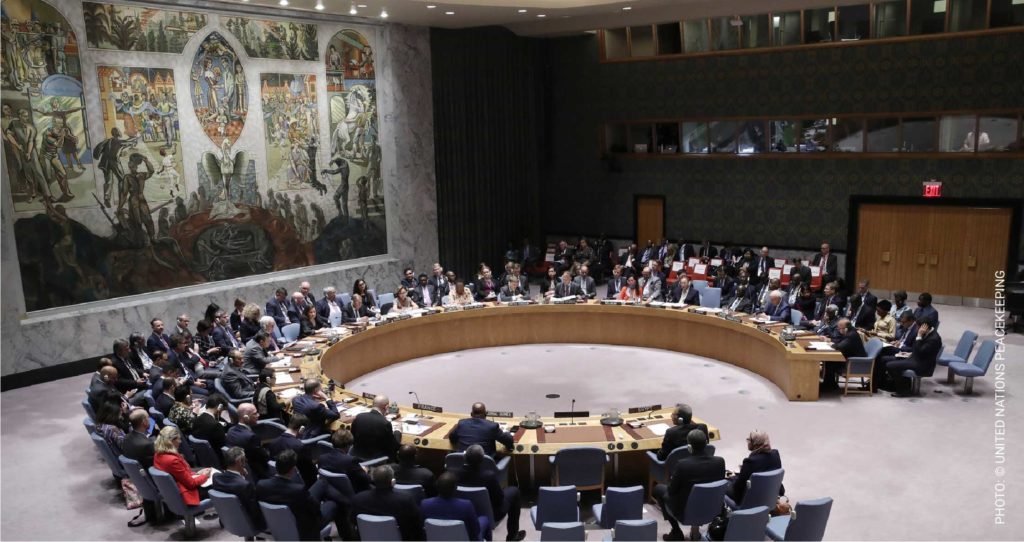
Although the UN has faced criticisms for its limitations, it remains an essential institution for addressing the world’s most pressing issues.
One of the reasons why the UN remains relevant is its ability to mobilize resources and coordinate efforts towards global challenges. Its ability to set and promote international standards and norms.
Upholding human rights. The UN’s human rights bodies and mechanisms provide an essential avenue for monitoring and investigating these violations, and for promoting accountability and justice.
It must be Transparent and and accountable by promoting open and inclusive decision-making processes.
It must reform its organizations for equal participation and influence by all global regions and interests.
It must embrace technology and innovation to increase its effectiveness and efficiency.
The challenges facing the world today – such as climate change, pandemics, and terrorism – require coordinated and collective action at the global level, and the UN is uniquely positioned to play a central role in this effort.
The reforms must aim to make the UN nimbler, less bureaucratic, more transparent and accountable, and more decentralized and effective.
They must be about placing sustainable development “at the heart” of the UN because development is the UN’s “best tool for preventing conflict and building a future of peace.
None of these reforms can be achived while the veto power of its five permanent members remain.
The ICJ is the UN’s judicial organ, composed of 15 judges elected to nine-year terms by the General Assembly and Security Council. The ICJ does not have the authority to weigh in on any international legal dispute it wishes; instead, the Court’s ability to hear a case is derived from the consent of the Member States concerned.
Member States are bound to comply with ICJ decisions in any case to which they are a party is now a joke.
The UN system is comprised of more than 30 affiliated organizations, all with conflict of interest.
Perhaps its time to move these agencies out of the UN into independent organiations, subject to an new AI world sustainable legal consitution.
Discussing reforms without making provisions for adequate resources will lead nowhere; ( See previous post on Funding to bring the United Nations closer to “we the people.”)
A permanent coordinating platform should be set up to integrate the UN response across agencies, funds, and related organizations. Data is now a major economic asset, but its use and consequences go well beyond commercial issues to matters such as the quality of society and political systems.
The distribution of power has also shifted considerably. Global institutions need to reflect these changes or lose legitimacy in the eyes of the emerging players, whether governments or their people.
Yet data governance at the global level lags well behind technological developments
.In today’s complex world, identifying problems, designing policies, and delivering change is no longer within the power of states standing alone. It requires participation of diverse actors, including nonprofits, grassroots movements, corporations, and local authorities.
Getting inclusivity right and shifting to a more equitable governance model will be critical to weathering power politics and delivering for all.
All human comments appriciated. All like clicks and abuse chucked in the bin
Contact: bobdillon33@gmail.com
 bobdillon33blog