
Tags
AI, Algorithms., Artificial Intelligence., Capitalism and Greed, Capitalism vs. the Climate., Society, tech, Technology, The Future of Mankind, Visions of the future.
( Four minute read)
Humans are highly social creatures.
Advancements in technology is now completely re-shaped the everyday routine of the Modern Human.
Developing a chokehold on our lives, to the point of corverting us all into product to be harvested on a 24/24 bases by profit seeking algorithms.
Our brains have become wired to process social information, and we usually feel better when we are connected. Social media taps into this tendency.
When you develop a population-scale technology that delivers social signals to the tune of trillions per day in real-time, the rise of social media isn’t unexpected.
It’s like tossing a lit match into a pool of gasoline.
The once-prevalent, gauzy utopian vision of online community is disappearing,
Why?
BECAUSE ITS NOT GETTING ANY EASYER AT BEING A PERSON, IN THIS TECHNOLOGICALLY FUCKED UP SUPPOSELY CONNECTED WORLD.
Along with the benefits of eaiser connectivity and increased information, social media has also become a vehicle for disinformation and political attacks from beyond sovereign borders.
With little or now privacy left, we are now left to endure, rather than enjoye a life on social media, gorging on the most lurid speculation which one feels kind of stuck and unconsciously obliged to check it way more than you want to
I dont know about you but I am sick of seeing people so drawn to their phones at social events and in general I wonder are we are all just becoming AI predictions as what we are and how we live our lives.
Companies like Google, X, and Meta collect vast amounts of user data, in part to better understand and improve their platforms but largely to be able to sell targeted advertising.
Collection of sensitive information around users’ race, ethnicity, sexuality, or other identifiers are now not just putting people at risk, they are also desentizing us at large to the state of the world.
Even for users who want to opt out of ravenous data collection, privacy policies remain complicated and vague, and many users don’t have the time or knowledge of legalese to parse through them.
At best, users can figure out what data won’t be collected, but either way, the onus is really on the users to sift through policies, trying to make sense of what’s really happening with their data.
There’s a very strong corollary between the data that’s collected about us and current state of the world -wars – growing inequality – demishing democracy – lack of long term actions, such as on Climate Change that has now turned into an industry not a threat to our very existence.
————–
The emergence of smartphones in 2007 generated macro data, which uses artificial intelligence transforming our daily routines.
There are no laws that require platforms to show how they use or sell the data collected.
So far, attempts to curtail the collection of users’ data has been piecemeal, largely driven by state-level laws and individual enforcement actions. Regulation continues to be extraordinarily behind.
The companies are not going to change on their own.
However it barely scratches the surface of what they have enabled, with few arenas of human endeavour left untouched by the smartphone.
Against the backdrop of the constant rise in time spent by young people on social media, a staggering 74% of them are checking their social media accounts more than they would like to. Instagram, TikTok and other social media have become daily fixtures in their lives with 59% of young people now spending more than two hours of their average day on social media.
The five most popular platforms are Instagram, YouTube, TikTok, Snapchat and Facebook.
Whilst YouTube and TikTok dominate as sources of entertainment, Instagram, Snapchat and BeReal are the platforms most widely posted on by young people.
Addictive platform design take on young people’s mental health and their feeling of powerlessness in the face of global companies’ constant nudging to participate in a vicious cycle of personal data sharing and content consumption.
The “addictive” lure of the constant stream of updates and personalized recommendations, often feeling “overstimulated” and “distracted”, but algorithms pick up on mental health issues and expose users to ever more related content, bombarding us with bad news as it stimulated more viewings, till we are all officially desensitized.
Something bad happens across the country? We hear about it. Something bad happens across the world? We hear about it. Something good news happens, for all intitive purpose it is ignored.
—————————
The natural question at this point, it would seem, would be to ask where we should draw the line.
Why tragedies stop seeming so tragic – and why this needs to stop.
The sheer amount of violence present in the world only seems to be increasing with Netflicks quietly capitalizing on another form of content. More than other entertainment outlets, Netflix’s hit shows spotlight gruesome violence. More than other entertainment outlets, a number of Netflix’s hit shows spotlight gruesome violence, often committed against women.
Escalating violence on-screen can make us more tolerant of it in real life.
Gone are the days of bang bang ypur dead Graphic, realistic violent content is considered the ‘norm’ post-watershed.
This is not necessarily because people are becoming more violent in their nature, but is rather due to increased methods of communication brought on by technological improvements like playing violent video games.
Is it possible that individuals who consume violent media not only become more aggressive, but also make their friends and family more aggressive, even if those do not consume violent media themselves? The consumer is actively influencing her/his friend to make her/him more alike.
We don’t process large numbers as well as we do smaller numbers.
How sad should we be over the news of those dead in Gaza? Utterly distraught, significantly, not much?
—————
Mobile phones are now extraordinarily multi-functional, but mass access to knowledge in the age of communications threatens basic concepts such as individual identity and autonomy.
To maintain our empathy for others, it is important to first extend it to ourselves and to those within our immediate circle.
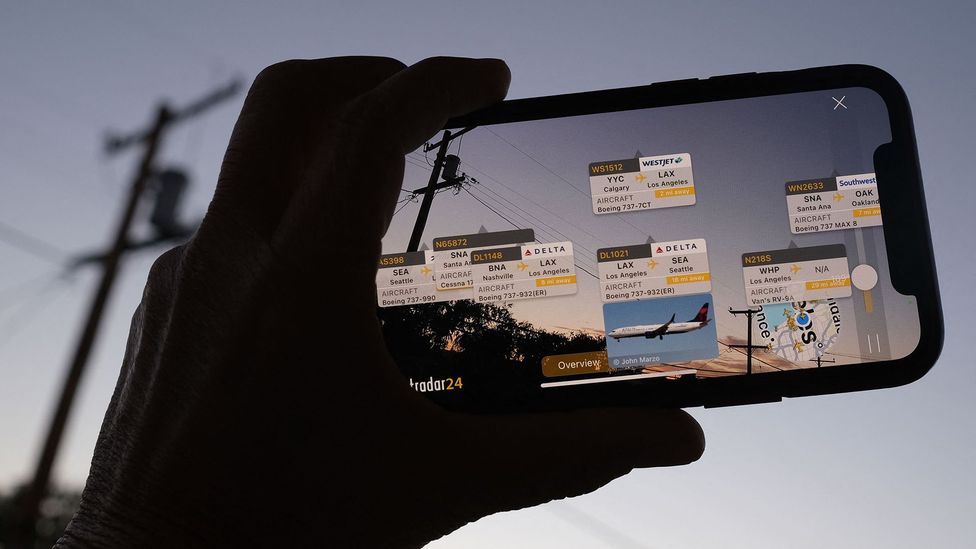
The Smart phone is destroying this empathy, one of the most ubiquitous technology devices of all time, with the ability to take the device everywhere comes the idea that no one is ever far from the things that matter most to them.
With the death of proximity, the smartphone has become your home, but home is no longer a refuge.
We don’t know about how our smartphones are affecting us.
Are they alienating people from each other, or helping them to connect with others?
Do they affect children differently than adults?
And how do we step away from our phones if our whole lives are on them?
Smartphones are basic necessities but it is only by looking at the vastly different uses and contexts that we can fully understand the consequences of smartphones for people’s lives around the world.
Combining artificial intelligence with the extraordinary data-gathering capabilities of smartphones, is creating other opportunities. Millions of people across many parts of the world that are conflict-bound or subject to some of the worst effects of the climate crisis have left their homeland behind completely in search of a new life are using their smartphone to navigate their circumstances and situations.
(According to the UN, there were 110 million forcibly displaced people in the world.)
If you ask people how much they care about all people on earth dying, it’s not seven-and-half billion times more concern, than if you told them one person would die.
————————
If we assume that transcendentally brilliant artificial minds won’t be along to save or destroy us, and live according to that outlook, then what is the worst that could happen – we build a better world for nothing?
We need a cultural change in values, to enable more deliberate decision-making.
If we don’t the future of society, as defined by the scientific and technological revolutions needs a custom ethical and philosophical direction, as the world is rapidly moving to each person doing what’s best for themselves.
Or to put it more bluntly.
Someday in the future, someone will arrive at another turning point where the fate of the species is theirs to decide.
If our extinction proceeds slowly enough to allow a moment of horrified realisation, the doers of the deed will likely be quite taken aback… if the Earth is destroyed, it will probably be by mistake.
Society used to be able to make a long-term plan and that’s not something that happens now.
We go to quick fixes.
———————-
Clearly, technology by itself is neither good nor bad.
It is only the way and extent to which we use it that matters. It is indisputable that thanks to technology, we get a chance to live a life our predecessors could not even dream about. However reality does not take place in Smartphones.
There is no economy or individual that is unaffected by climate change. By 2050, this problem could force 216 million people to relocate within their own nations.
When all areas of human activity get rapidly digitized, it’s easy to become desensitized to the importance of innovations and advancements for the overall progress of society.
Those in the tech industry know that the opportunities on this horizon are endless.
——————
What are today’s challenges for artificial intelligence?
Building technology for the sake of technology won’t cut it in a globalized society.
There’s a juxtaposition between the need for a more connected world and hesitation from people toward technology that tech innovators need to account for and solve.
The development of new advancements must be rooted in a holistic mindset balancing desire for more conveniences with feasible solutions to meet the needs of future generations.
To accomplish this, education will play a critical role in bridging perceptions and fostering authentic trust between technology and humans.
Indeed it is my belief that all teenagers are now in need to be educated in classroom in the use of mobiles.
Do you believe technology should be more focused on the problems of society or individual needs?
Is technology being used sufficiently to tackle society’s major issues?
—————
The human species will change with genetic editing, artificial intelligence challenges the concept of “I” and “individual;” and robotics will bring new “companion robots,” which we need to define and adopt socially.
In the last 10 years, genetics has made it possible to analyse old DNA and, as a result, revealed the history of the planet’s first inhabitants. We are now a single human species but we finally know that descend from other species. We now have unprecedented tools to inform and transform society and to protect the environment.
How should we harness this potential in the future?
How does this perspective change our understanding of the current human diversity?
Excessive use of gadgets, lack of offline communication, and social media abuse were proven to cause negative effects on mental health.
It is indispensable to give machines “common-sense knowledge” in order to move toward the ambitious goal of building “truly intelligent” general AI.
This is the time to make the necessary decisions to outline this path.
When robots take the final leap from our imagination to our homes and workplaces, they will become our companions; they will add new possibilities and countless variables to our patterns of behaviour: they will change how and where we build, how we move or the materials we use to create things.
——————–
How, exactly, could AI destroy us?
We humans have already wiped out a significant fraction of all the species on Earth.
That is what you should expect to happen as a less intelligent species – which is what we are likely to become, given the rate of progress of artificial intelligence. For example, in many cases, we have wiped out species just because we wanted resources.
The worst-case scenario is that we fail to disrupt the status quo, in which very powerful companies develop and deploy AI in invisible and obscure ways.
As AI becomes increasingly capable, and speculative fears about far-future existential risks gather mainstream attention, we need to work urgently to understand, prevent and remedy present-day harms.
These harms are playing out every day, with powerful algorithmic technology being used to mediate our relationships between one another and between ourselves and our institutions.
—————————–
How would AI get physical agency?
In the very early stages, by using humans as its hands.
You feel as though you are encountering absolute reality, whatever the hell that is, enlightenment is nothing more than a “pure consciousness event which is just a stepping-stone, at best, to true enlightenment, which does not make you permanently happy, let alone ecstatic. It is a state that incorporates all human emotions and qualities: love and hate, desire and fear, wisdom and ignorance.
Enlightenment does not give you answers to scientific riddles such as the origin of the universe, or of conscious life, just as electrons can be described as waves and particles, so ultimate reality might be timeless and aimless—and also have some directionality and purpose.
The ability to hold opposites, emotional opposites, at the same time is really what we’re after.
However the mind remains in many respects unchanged, you discover a void at the heart of reality.
Not until you realize you’re the same jerk you were all along.
The biggest power trip you can imagine” and an “aphrodisiac.” you think you’re God.
The object vanishes and only consciousness remains, it becomes its own subject and object.
It becomes aware of itself, seeing life as an illusion that makes accepting death easier.
What you are, and what the world is.
I must be missing something. What can we do about it?”
I want to bring us back to a more practical reality, which is that technology is what we make it, and we are abdicating our responsibility to steer technology toward good and away from bad.
That is the path I try to illuminate in this post an issue of social responsibility.
All human comments appreciated. All like clicks and abuse chunked in the bin.
Contact: bobdillon33@gmail.com
 bobdillon33blog