
IT WON’T BE LONG BEFORE WE NEED TO REINVENT WHAT A STATE/OR COUNTRIES BOARDERS MEANS.
(Fifteen minute read)
It is absolutely essential that we use common sense in many situations, particularly when trying to understand and deal with other human beings. We cannot leave millions of displaced people and their hosts to face the consequences of a changing climate alone.
Just five countries produce 68% of all refugees displaced abroad: the Syrian Arab Republic, Venezuela, Afghanistan, South Sudan, Myanmar and Yemen and the Ukraine.
There are more than 60 million internally displaced people – this has risen to 200 million at the end of 2023.
While there is a general consensus that global warming impacts us all, the role it will play in future human migration is often underestimated. Climate change disproportionately impacts developing countries, and more specifically fragile states.
It is estimated that, by 2050, between 150 to 200 million people are at risk of being forced to leave their homes as a result of desertification, rising sea levels and extreme weather conditions.
Disinformation doesn’t need to be sophisticated to be successful, because disinformation travels faster online than the truth.
This is why we have a plague of greenwashing from both governments and manufacturing industries both using social media and advertising to promote almost every thing as good for the environment.
The last few years may well go down in history as the golden age of greenwashing, but it’s not until very recently that this practice has truly taken off.
Greenwashing is our Pied Piper to climate doom.
Everything, (thanks to the advertising industry) has gone from Non Bio to ECO, BIO and ORGANIC all forms of Greenwashing, when in fact there is no such thing as Bio. (The terms eco, bio or organic denote a product with a mass of at least 95% organic ingredients. The remaining 5% is left in the case of atmospheric pollution.)
The term greenwashing itself seems to have first appeared back in the 1980s, at a time of major environmental disasters and climate science going mainstream.
Having put down the climate denial playbook, many oil and gas firms reached for the greenwash spray gun to create the false perception, that planet-critical problems are and were being tackled, even solved, when they are not.
Greenwashing also comes with an additional twist:
Under this mass hypnosis, public pressure on polluting companies evaporates and the tough decisions needed to cut carbon emissions are kicked into the long grass.
The most recent example of this. Is the UK government granting the go ahead to the development of The Rosebank Oil field, under the pretence that producing Oil rather than importing it, saves Co2 admission.
A single new oil and gas field in the North Sea would be enough to exceed the UK’s carbon budgets from its operations alone. The emissions from Rosebank’s operations alone – not counting any emissions from burning the oil and gas it is likely to produce – are likely to reach 5.6m tonnes of carbon dioxide.
The UK government cannot allow big polluters to use offsetting as an alibi to carry on fuelling the climate emergency while pretending that they’re tackling the problem.
It’s riddled with flaws.
“Morally obscene” and we should worry about it.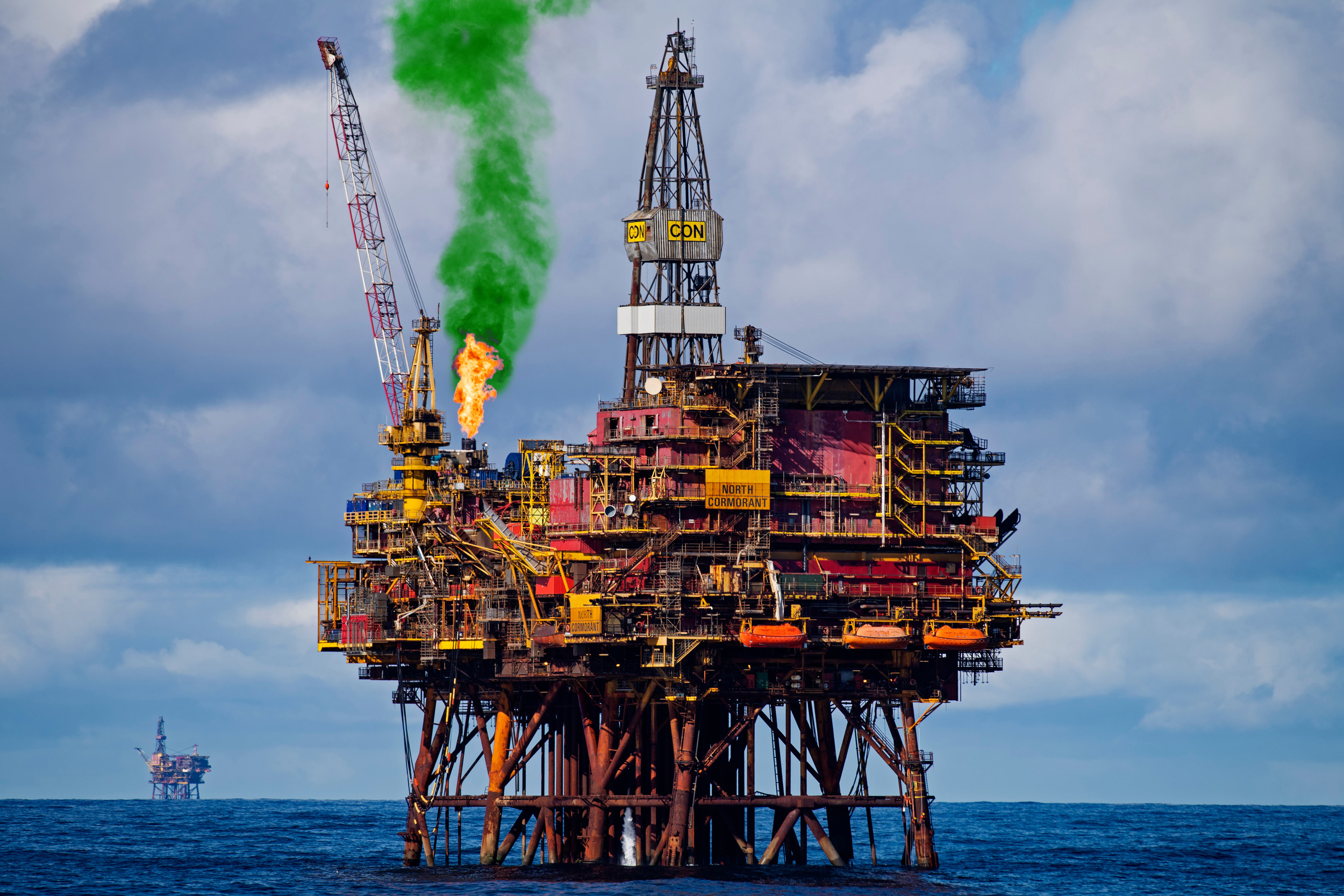
Sadly, the way out of the climate emergency is just not simple.
The aim is pretty much obvious. To delay or avoid action to avert catastrophic climate change.
Offsetting schemes provide a good story that allows companies to swerve away from taking meaningful action on their carbon emissions. Offset schemes also serve to make fossil fuels more palatable to increasingly eco-conscious consumers.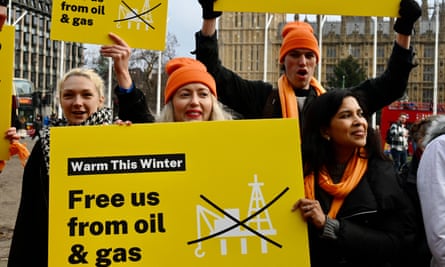
If big polluters like oil giants and airlines can have their “carbon-neutral” petrol and flights, what about that other major source of planet-heating emissions, the meat industry?
Why can’t they have their net-zero bacon?
Greenwash is raining all around us, sprayed by an out-of-control garden sprinkler of profit seeking algorithms, before sustainability.
Is there anything we can do to stop it?
And what about the law? Is greenwashing legal?
There’s no specific law banning greenwashing.
If we’re serious about tackling climate change, there is only one answer to the problem: these companies and industries need to put people and planet over profit by completely overhauling their business models.
The threat posed by climate change and its social repercussions dwarf those surrounding national security.
It is a problem that is going to brake the camel back, the redistribution of the world population.
It could not be more global in nature.
No Cop meeting is going to solve this problem.
With up to three billion people expected to be displaced by the effects of global warming by the end of the century, should it lead to a shift in the way we think about national borders?
If we dont unavoidable increases in multiple climate hazards, wars will be the net result.
No one country can tackle them on their own no matter how large their population, how strong their economy or how feared their military.
The challenges threatening global cooperation are as clear as the need, which makes it one of the most serious issues of the day. Already record numbers of people are being forced to flee their homes with each passing year. In 2021, there were 89.3 million people, double the number forcibly displayed a decade ago, and in 2022 that number reached 100 million, with climate disasters displacing many more people than conflicts.
Back to Borders:
Borders define our fate, our life expectancy, our identity, and so much more.
Our borders don’t exist as immutable facets of the landscape, they are not natural parts of our planet, and were invented relatively recently. Most of these imaginary lines with our soaring populations, dramatic climate changes and resource scarcity are not fit for the world of the 21st Century.
The conditions are changing.
An estimated 279 million people are packed into a thin band of land, which cuts through countries including India, Pakistan, Bangladesh, China, the United States and Mexico.
On average, climate niches – the range of conditions at which species can normally exist – around the world are moving pole wards at a pace of 1.15m (3.8ft) per day.
As global temperatures increase, causing climate change, sea level rise and extreme weather over the coming decades, large parts of the world that are home to some of the biggest populations will become increasingly hard to live in. Coastlines, island states and major cities in the tropics will be among the hardest hit, according to predictions by climate scientists.
With so many people on the move, will this mean that invented political borders, ostensibly imposed for national security, become increasingly meaningless?
Today just over 3% of the global population are international migrants. However, migrants contribute around 10% of global GDP or $6.7tn (£5.9tn) – some $3tn (£2.6tn) more than they would have produced in their origin countries.
The main barrier is our system of borders – movement restrictions either imposed by someone’s own state or by the states they wish to enter.
——————
Close to 193 million people were experiencing acute food insecurity, which is an increase of almost 40 million since 2020.
The World Bank updated the International Poverty Line from $1.90 to $2.15. This means anyone living on less than $2.15 is in “extreme poverty.” 62% of the global population lives on less than $10/day.
And we wonder why we are having problems with migration.
The conversation about migration has become stuck on what ought to be allowed, rather than planning for what will occur.
Everyone could be offered an official form of United Nations citizenship in addition to their birth citizenship.
For some people, such as those born in refugee camps, lacking papers, or citizens of small island states that will cease to exist later this century, UN citizenship may well be their only access to international recognition and assistance, even though citizenship is a human right.
Passports could be issued on the back of this.
—————
The main problem with refugees and migrants is identification and this problem is only going one direction.
What if refugees and migrants were issued with a Digital United Nations Statues Cards ( allowing temporary residence till its feasible to return to their countries of origin.)
Green for Genuine refugees, Red for Economic migrants.
Such a card could record the date of entry, date of birth, name, country of origin, and be used as Id.
Each card has a ping number, that has to be activate yearly TO ADVOID AN EXPIRY DATE, also in order to received any service or work.
After all lots of countries need migrant labour’s, it being one of biggest economic resource.
With the card it could be managed far more effectively and efficiently.
THEY WOULD GO A LONG WAY TO HELP TO ADVOD A HUMANITY ARMAGEDDON DUE TO CLIMATE CHANGE / MIGRATION.
There are, however, true human borders set not by politics or hereditary sovereigns, but by the physical properties of our planet. These planetary borders for our mammal species are defined by geography and climate. Humans cannot live in large numbers in Antarctica or in the Sahara Desert, for instance.
The war in Ukraine has sparked the fastest-growing refugee crisis since WWII.
Combined with current war’s all undermine global efforts to combat climate change the possibilities that any one conflicts can spin out of anyone’s control remains high.
The greatest danger to humanity came from nuclear weapons” if NATO stepped in to help Ukraine.
The continuing stream of disinformation about bio weapons laboratories in Ukraine raises concerns that Russia itself maybe thinking of deploying such weapons.
Compounding this, the global population is still growing. and with the advent of social media Global democracy is eroding. Rapid digitalization comes with many issues like the world is becoming complacent about the potential risks to the plant.
Restoring trust and fostering cooperation within and between countries will be crucial to addressing the challenges from cybersecurity threats to humanitarian emergencies, to protecting democracy.
Strong cooperation between countries, preventing the world from drifting further apart.
So where are we.
Today, we are experiencing a planetary crisis and I believe it is time to see ourselves as members of one globally dispersed species that must cooperate to survive. The scale of the climate crisis requires new global cooperation and, I believe, new international citizenship with global bodies for migration and for the biosphere – new authorities that are paid for by our taxes and to which nation states are accountable.
Try, if you will, to clear from your mind the idea of people being fixed to a location they were born in, as if it affects your value as a person or your rights as an individual. As if nationality were anything more than an arbitrary line drawn on a map. See instead these lines as fusions of cultural richness, transitions rather than barriers across the possibilities that Earth’s lands offer us all.
Currently, the United Nations has no executive powers over nation states, but that may well need to change if we are to bring down global temperatures, reduce the concentration of carbon dioxide in the atmosphere and restore the world’s biodiversity.
When it comes to addressing poverty, climate change, healthcare, gender equality, and more, corruption gets in the way. Because corruption is a global problem, global solutions are necessary. Reform, better accountability systems, and open processes will all help.
Science/ Technology’s must pair with equity or they will actually make inequalities worse.
————–
It will take work to reinvent the concept of the nation state so it becomes more inclusive so that it strengthens local connections while forging greater and more equitable global networks.
The Green New Deals proposed in the European Union and the US are examples of policies aimed at restoring economies, providing jobs and boosting dignity while helping unite people in a bigger social project of environmental transformation.
Finally the debt crises will become one of the most pressing issues over the next decade
All human comments appreciated. All like clicks and abuse chucked in the bin.
Contact: bobdillon33@gmail.com
 bobdillon33blog