
( Five minute read)
Never mind the rising temperature, the rising seas, the rising migration, the rising costs, the rising dormant microbes , the rising fires, the rising floods, the rising food shortages, the rising in action.
The enormous, unprecedented pain and turmoil caused by the climate crisis is often discussed alongside what can seem like surprisingly small temperature increases – 1.5C or 2C hotter than it was in the era just before the car replaced the horse and cart.
But the single digit numbers obscure huge ramifications at stake.
We have being and will be building a civilization based on a world that doesn’t exist anymore.
Cranking up the temperature of the entire globe, within little more than a century is, in fact, extraordinary. Our oceans alone are now absorbing the heat equivalent of five Hiroshima atomic bombs dropping into the water every second.
We have now unmoored ourselves from our past, as if we have transplanted ourselves onto another planet.
The difference between 1.5C and 2C is a death sentence with world’s governments currently failing to avert a grim fate, for the sake of GDP – Re election – call it what you want, no amount of global warming can be considered safe and people are already dying from climate change. The fingerprint of climate change on recent extreme weather is quite clear.
Across the planet, people are set to be strafed by cascading storms, heatwaves, flooding and drought. Around 216 million people, mostly from developing countries, will be forced to flee these impacts by 2050 unless radical action is taken.
At 1.5C, about 14% of the world’s population will be hit by severe heatwaves once every five years. with this number jumping to more than a third of the global population at 2C.
Beyond 1.5C, the heat in tropical regions of the world will push societies to the limits, with stifling humidity preventing sweat. A severe heatwave historically expected once a decade will happen every other year at 2C. Nearly one in 10 vertebrate animals and almost one in five plants will lose half of their habitat. Ecosystems spanning corals, wetlands, alpine areas and the Arctic “are set to die off” at this level of heating.
Heat the world a bit more than 2c and a third of all the world’s food production will be at risk by the end of the century as crops start to wilt and fail in the heat.
Earth’s hotter climate is causing the atmosphere to hold more water, then releasing the water in the form of extreme precipitation events.
Meanwhile, in the past 20 years the aggregated level of terrestrial water available to humanity has dropped at a rate of 1cm per year, with more than five billion people expected to have an inadequate water supply within the next three decades.
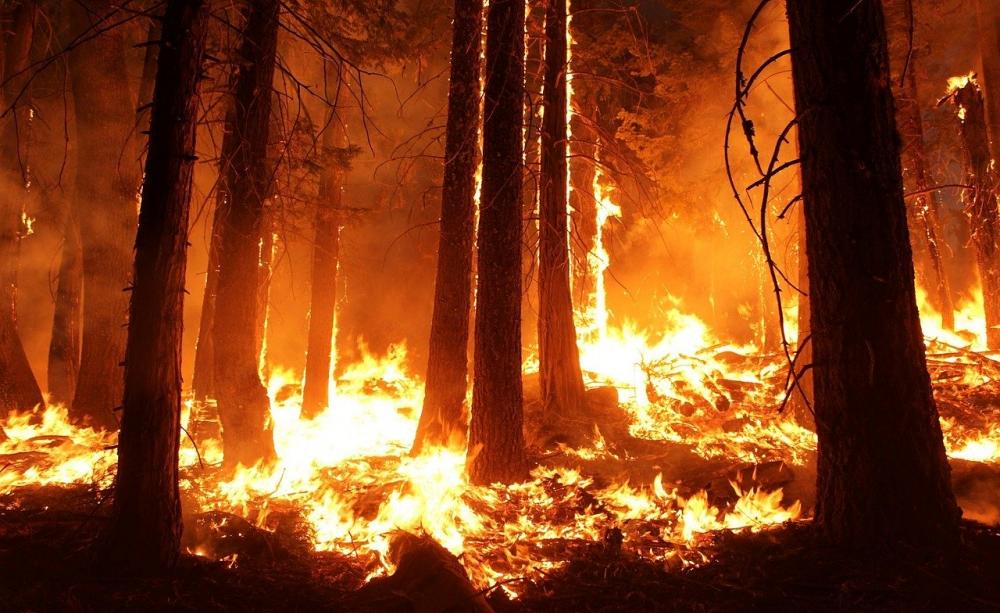
Virtually all of North America and Europe will be at heightened risk of wildfires at 3C of heating.
A disquieting unknown is the knock-on impacts as epochal norms continue to fall.
What if permafrost melting or flooding cuts off critical roads used by supply chains? What if storms knock out the world’s leading computer chip factory? What happens once half of the world is exposed to disease-carrying mosquitos?
We don’t understand the non-linear effects,
The climate crisis is beginning to take a toll on food production.
Despite the rapid advance of renewable energy and, more recently, electric vehicles, countries still remain umbilically connected to fossil fuels, subsidizing oil, coal and gas to the tune of around $11m every single minute.
By the end of this year the world will have burned through 86% of the carbon “budget” that would allow us just a coin flip’s chance of staying below 1.5C.
A scenario approaching some sort of apocalypse would comfortably arrive should the world heat up by 4C or more, and although this is considered unlikely due to the belated action by governments, it should provide little comfort.
Every decision – every oil drilling lease, every acre of the Amazon rainforest torched for livestock pasture, every new gas-guzzling SUV that rolls onto the road – will decide how far we tumble down the hill.
The action is far too slow at the moment.
Playing down the potential worst effects of global heating and climate breakdown is nothing less than climate appeasement.
It does nothing to help spur the urgent action that is required, and by underplaying the climate threat, works – intentionally or not – to encourage a grudging and cautionary approach to emissions cuts that we simply can no longer afford.
Make no mistake, this is a war.
All human comments appreciated. All like clicks and abuse chucked in the bin.
Contact: bobdillon33@gmail.com
 bobdillon33blog