
Tags
Capitalism and Greed, Capitalism vs. the Climate., Climate change, The Future of Mankind, Visions of the future.
( Fourteen minute read)
Why is this so ?
We lack the collective will to address climate change because of the way our brains have evolved over the last two million years..
As individuals, we know what we can do about climate change. But addressing the issue also requires collective action on a scale that exceeds our evolutionary capacities. The larger the group, the more challenging it gets.
We know that climate change is happening, but cognitive biases that ensure our initial survival make it difficult to address, complex, long-term challenges that now threaten our existence, like climate change.
They impede our ability to take action, now hamstringing our ability to respond to what could be the largest crisis humanity has ever created or had to face. 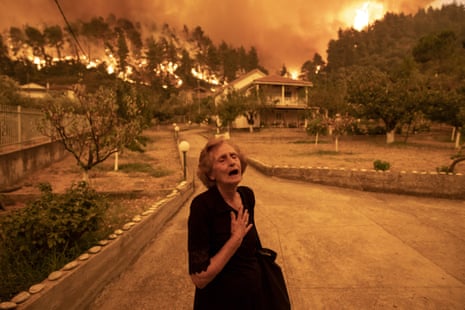
Prevention is no longer an option.
The natural systems that regulate climate on the planet are already changing, and ecosystems that support us are shifting under our feet, undermining many of the ecological foundations of our ability to provide for basic needs.
Clearly, one of the key challenges is going to be how the burden is distributed, and how we respond to the vulnerability of people to climatic shifts and adjustments – from drought and floods, to health issues ranging from disease to heatstroke, to food security, to environmental migrations.
And, of course, our actions now – given the delay between emissions and impact – will harm people in the future. So our responsibilities of justice now extend over vast stretches of geography and time.
We will be a climate-challenged society for the foreseeable future, immersed in a long age of adaptation.
But that information hasn’t been enough to change our behaviours on a scale great enough to stop climate change. And a big part of the reason is our own evolution.
The same behaviours that once helped us survive are, today, working against us. We imagine we live in a rational, enlightened society. In such a place, experts would identify issues to be addressed, and goals to be reached, in response to our creation of climate change. Scientific knowledge would be respected and accepted (after peer review, of course), and policy would be fashioned in response.
Ignoring climate change in the short term has benefits both to individuals and to organizations.
Climate change is a nonlinear problem.
When a function increases slowly at first and then accelerates, though, that causes problems, because people extrapolate that function linearly, without obvious consequences until suddenly there is a significant problem.
Many effects of climate change are distant from most people.
People conceptualize things that are psychologically distant from them (in time, space, or social distance) more abstractly than things that are psychologically close. When there are weather disasters that are probably a reflection of climate change (like wildfires or extreme storms), they tend to happen far away from where most people live.
As a result, most people are not forced to grapple with the specifics of climate change, but rather can treat it as an abstract concept.
Abstract concepts simply don’t motivate people to act as forcefully as specific ones do.
Only when you and me and others experience this future threat in the present (rather than something that is still a generation away) will it have enough motivational force to get us to engage in actions that take more effort today.
Consider what you’d be willing to forgo today knowing that in one generation there will be serious, catastrophic consequences because of inaction.
Ultimately, we have to be willing to be explicit about the values we are acting on.
If we choose to enrich our lives in the present at the cost of the quality of life of future generations, that is a choice of values that we rarely like to make explicitly. We have to be willing to look in the mirror and say that we are willing to live our lives selfishly, without regard to the lives of our children and grandchildren.
And if we are not willing to own that selfish value, then we have to make a change in our behaviour today.
WHEN THE LAST INSECT DISSAPEARS SO DOES OUR FOOD CHAIN.
Why People Aren’t Motivated to Address Climate Change.
Even more challenging, however, is the reality that our emissions undermine the environments of vulnerable people elsewhere:
Unfortunately, climate change involves a combination of factors that make it hard for people to get motivated.
In the case of climate change, there are sceptics who argue that it is not certain that the influence of human activity on climate will have the dire consequences that some experts have projected.
People are much better with obvious threats like that nasty dog at the door than they are with threats that escalate quickly and nonlinearly.
Now we have entered a new era in the human relationship with climate change, with a variety of broad and different challenges.
So how might we begin to address the challenges of climate justice?
We may be dealing with an issue with a level of complexity that human beings are simply not capable of addressing. Climate change will certainly challenge our adaptive abilities more than anything else the species has faced.
It will demand multi-scale, widely-distributed, networked, flexible, anticipatory, and adaptive responses on the part of governments from the global down to the local.
Climate change will require a radical re-thinking of the very nature of governance, and the adoption of new forms
We are capable of changing our currently destructive relationship with the rest of nature.
Key here is the reality that, in bringing climate change upon ourselves, we have demonstrated that the very construction of how we immerse ourselves in the natural world, and how we provide for our basic needs, is simply not working.
In fact, our relationship with nature is undermining the lives we’ve constructed.
Our continued refusal to recognise ourselves as animals embedded in ecosystems has resulted in the undermining of those systems that sustain us.
That’s our key problem, our central challenge.
Many groups and movements are rethinking and restructuring the ways we interact with the natural world as we provide for our basic needs – around sustainable energy, local food security, and even crafting and making. These new materialist movements offer alternative ways of relating to the nonhuman systems that sustain us, and illustrate the possibility of redesigning and restructuring our everyday lives based in our immersion in natural systems. After 30 years of failing in our response to climate change, we may yet demonstrate that human beings still have the capacity to adapt.
The good news is that our biological evolution hasn’t just hindered us from addressing the challenge of climate change. It’s also equipped us with capacities to overcome them. How we communicate about climate change influences how we respond.
All human comments much appreciated. All like clicks and abuse chucked in the bin.
Contact: bobdillon33@gmail.com
 bobdillon33blog