
( Seven minute read)
Scientists have made climate change appear difficult but it’s not difficult to understand.
All living things respond to climate and changes in the climate, even if these changes are subtle and temporary. Our own experience of climate throughout our lifetimes, along with scientific records, also proves that climate change is happening. Weather is simply the set of atmospheric conditions at one location at one limited period of time. Climate, however, involves the average condition of the atmosphere over a long period of time (such as across a few decades or more) at a given location.
At timescales of thousands of years beyond human lifetimes, climate responds to the precession (slow rotation or “wobble”) of Earth’s axis, the planet’s tilt (obliquity), and the changes to the elliptical shape (eccentricity) of Earth’s orbit.
These phenomena interact with one another to determine the amount of sunlight (and thus solar heating) different parts of Earth’s surface receive during different seasons of the year.
Global and regional climates are changing too quickly for many forms of life to adapt and survive.
But this is not the whole story.
There is unequivocal evidence that Earth is warming at an unprecedented rate. Human activity is the principal cause.
Earth’s climate is on a path to warm beyond the range of what has been experienced over the past millions of years.
The range of uncertainty for the warming along the current emissions path is wide enough to encompass massively disruptive consequences to societies and ecosystems: as global temperatures rise, there is a real risk, however small, that one or more critical parts of the Earth’s climate system will experience abrupt, unpredictable and potentially irreversible changes. Disturbingly, scientists do not know how much warming is required to trigger such changes to the climate system.
When people are confronted with a difficult problem, they tend to disengage. In addition to that, beginning in the mid-eighties, Big Oil began a concerted campaign to sow doubt in the public’s mind; is the climate really changing, or is this just more variations in the weather?
The current warming is happening at a rate not seen in the past 10,000 years. It is undeniable that human activities have produced the atmospheric gases that have trapped more of the Sun’s energy in the Earth system. This extra energy has warmed the atmosphere, ocean, and land, and widespread and rapid changes in the atmosphere, ocean, cryosphere, and biosphere have occurred.
Most of the warming occurred in the past 40 years, with the seven most recent years being the warmest. The years 2016 and 2020 are tied for the warmest year on record.
This is why our planet is in trouble.
Why are our leaders, in government and industry, not telling us the truth about climate change?
The answer is simple:
Because they can’t. What is happening to the climate is bad news, and bad news does not get votes, or increase profits.
There is no need to inflate the magnitude of what is happening. It is time for us all to face the “cruel truth” that has been overlooked for too long.
The reality is confronting enough. If humans put too much carbon back in the atmosphere, there’s only one thing that can happen. The Earth will get hotter, maybe too hot.
It is not possible for modern man to combust fossil fuels, put the carbon back in the atmosphere, and still expect the current lifestyle to continue.
In order to counteract climate misinformation.
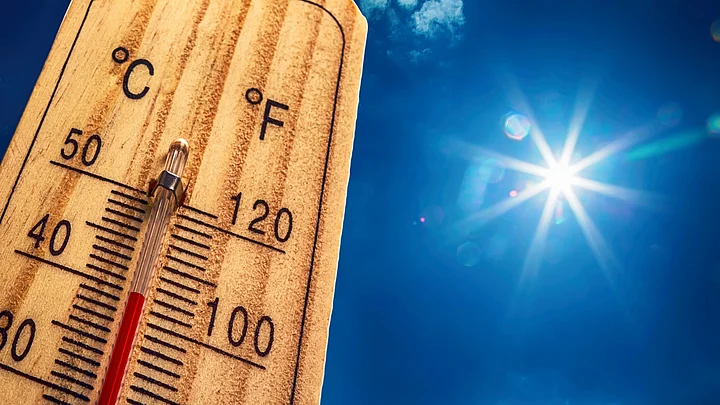
The list of records broken is itself unprecedented.
200 million people in the world, more than three times the UK population, will live below the tideline by the end of this century if levels continue to rise.
In the Hollywood blockbuster ‘The Day After Tomorrow’, ocean currents around the world stop as a result of global warming, triggering a new Ice Age on Earth. That may have been science fiction but scientists say the terrifying prophecy could soon become a reality.
The heat in the northern Atlantic Ocean has now pushed beyond what climate models predicted. The Atlantic Ocean current which drives the Gulf Stream could collapse at ‘any time’ from 2025 thanks to climate change.
A study published this week gives a further insight into what this might mean.
It suggests the climate system known as the Atlantic Meridional Overturning Circulation could shut down faster than previously thought – by about 2050, or possibly as soon as this decade – if emissions are not cut soon. The risk of an earlier ocean circulation breakdown has increased, with potentially disastrous and rapid ramifications for temperatures, rainfall and sea level rise. Similarly, the amount of sea ice around Antarctica continues to be far below previous record lows.
The Atlantic Meridional Overturning Circulation last collapsed 12,000 years ago.
The Gulf Stream system could collapse as soon as 2025, the impact would be devastating. Such a scenario is ’95 per cent certain.
This is not actually worse than we expected. It is the brutal reality of what scientists told us would happen.
Heat waves kill more people than fires, floods and cyclones. A study found extreme heat killed more than 61,000 in Europe alone last year.
Imagine the headlines if we knew about that in real time.
Human emissions are permanently adding the equivalent of an El Niño to the global system every five to 10 years.
The good news from scientists is that rapid action can still make a significant difference and limit future damage.
It would mean ruling a line under new fossil fuel developments where there are alternatives – that is, virtually all of them – and taking a war-footing approach that genuinely prioritised accelerating the transition that every major scientific body and government agrees is necessary.
It wouldn’t mean pretending the gas industry is a climate solution, or that nuclear energy is a serious climate solution. Nor is carbon capture and storage on track to be more than a niche technology, and paying for carbon offsets can’t justify fossil fuel use.
It would mean leaders acting as though they could persuade the public of what’s required, rather than living in fear of how they might respond.
Polls suggest a majority in many countries are open to action. Now’s our chance.
Alternatively, politicians could continue not delivering on the commitments made in Paris eight years ago and wait for another month as devastating as July 2023 before doing more. One thing we can say with confidence: It is likely to come around soon enough.
America’s Independence Day was celebrated on July 4th. That is the same day the Earth’s temperature was hotter than it has been at any time in history.
I don’t think it’s going to be anything that we can do as man to influence that to any great degree.
But I will tell you, again, looking at the past 4,000 or 5,000 years of human history, there’s a strong correlation between the rise and fall of temperature and the rise and fall of civilizations. And it’s just opposite of what we’re being told.
Going forward, who are you going to believe?
One only has to look at both major parties in the UK, currently diluting their plans to combat the climate crisis.
It’s hard to believe (due to politicians chopping and changing of their views and actions) that a new oil field ( Rosebank) where operation emission alone (not counting any emissions from burning the oil and gas it is likely to produce) – are likely to reach 5.6m tonnes of carbon dioxide, driving a coach and horses through any climate commitments.
Are there really people at the top of either of the main parties calling for abandonment of green policies.
You can bet your nannie that there are.
It is not my role to tell people what they should do or must believe about the rising threat of climate change but the consequences will devastate economies, infrastructure and political stability. We face risks of abrupt, unpredictable and potentially irreversible changes, and responding now will lower the risk and cost of taking action.
The verbal is over.
Its time to pour trillions/ trillions into providing non repayable grants before the lights go out.
( See previous posts. Placing 0.05% World Aid commission on all activities that are not sustainable )
All human comments appreciated. All like clicks and abuse chucked in the bin)
Contact: bobdillon33@gmail.com
 bobdillon33blog