
( Twelve minute read)
We all know that humans are bad for the planet, and for ourselves, but if you were asked to name the achievement of mankind what would be your list be like.
In our short fifty thousand-year history, we’ve had countless skirmishes, two World Wars, and are currently threatening over one million animal species with extinction, lending to our own.
Against this back ground it would appear that we have not progress an iota, as we are still unable to comprehend fully that the plant we live on is our home and that what lives on it, are all contact to our survival and hence its survival.
Will our species go extinct? The short answer is yes. The fossil record shows everything goes extinct, eventually. Almost all species that ever lived, over 99.9%, are extinct.
Humans are inevitably heading for extinction. The question isn’t whether we go extinct, but when.
When necessity becomes the mother of all inventions our adaptability will make us our own worst enemies, too clever for our own good. (We adapt unlike any other species, through learned behaviours — culture – not DNA.)
Changing the world sometimes means changing it for the worse, creating new dangers: nuclear weapons, pollution, overpopulation, climate change, pandemics.
Humans do not need to insert themselves into controlling life processes in every corner of the world, down to the very strands of DNA, to force the Earth system to absorb the shocks of our presence.
Up to Now we’ve escaped every trap we set for ourselves. So far.
Homo sapiens have already survived over 250,000 years of ice ages, eruptions, pandemics, and world wars. We could easily survive another 250,000 years or, longer. Survival sets a pretty low bar.
The question isn’t so much whether humans survive the next three or three hundred thousand years, but whether we can do more than just survive.
When the astronauts were on the moon, they were looking back at the Earth, they were not thinking that they were indeed inside the atmosphere of the Earth they were looking their home suspended in the void of the universe. A planet that has lost 68% of its biodiversity, replaced with human-made material including concrete, plastic and bricks now outweighing the total mass of biological matter on the planet.
All of this challenges the way we see our planet’s borders.
The Earth’s extended atmosphere isn’t much good for supporting life, so to understand any of this we must realise that no human is ever going to leave Earth. ( Other than in the form cyborg. A portmanteau of cybernetic and organism— a being with both organic and biomechatronic body parts.)
——–
The problems, all tied to human consumption and population growth, will almost certainly worsen over coming decades. The damage will be felt for centuries and threatens the survival of all species, including our own. To understand the enormity of the challenges we face, future environmental conditions will be far more dangerous than experts currently believe. The problems are too numerous to cover in full here.
Essentially, humans have created an ecological Ponzi scheme. Consumption, as a percentage of Earth’s capacity to regenerate itself, has grown from 73% in 1960 to more than 170% today.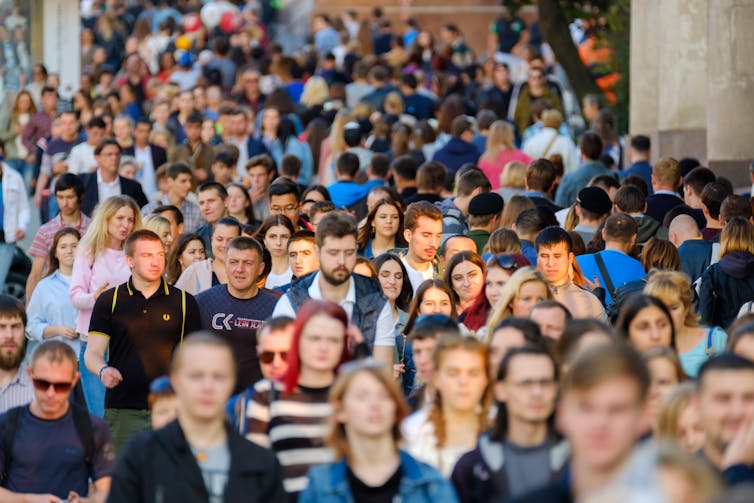
Because in the face of environmental collapse, humanity may need to turn to artificial replacements for nature.
What if, earth really was in trouble and the planet’s natural systems are fated to collapse and die off?
Will we develop artificial back-ups to take their place. Perhaps.
Technology will be needed to liberate the land required for rewilding. But, watching the recent flurry of commercial space flights, I wondered about how much biodiversity had been lost to make that happen, what it cost the Earth system.
If the Earth is not to be irreversibly degraded and unbalanced, we need some equal and opposite pull in the direction of replenishing natural complexity. Surely the best reward of a healthy planet is space exploration, not it being an escape from a dying planet.
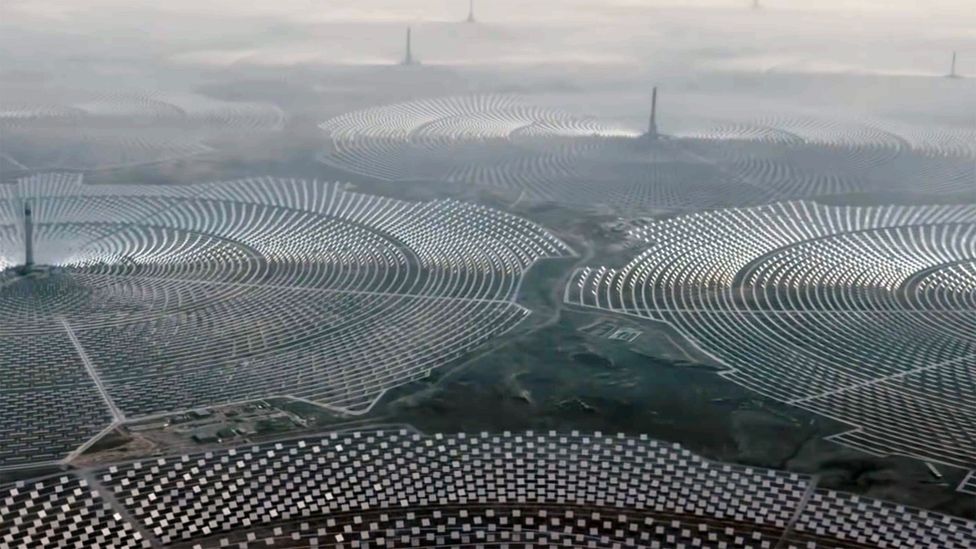
The technology we have made has many beneficial direct and side effects which will influence positions on this list.
MY LIST:
Fire. Without fire we as a species do not start living past the age of 30, we cannot create civilization and we cannot banish the dark starting to take control of our fears of what goes bump.in the night. True.
Gun power. Few inventions have had an impact on human affairs as dramatic and decisive as that of gunpowder. True.
The Wheel. Is one of the greatest achievement of mankind.. True
Language. An entire list of words, sentences, phrases and whole lot of grammar made up of strange sounds from our mouth have the power to express ourselves and others. Without language we would have been prisoners in our minds. Without Language creative writing wouldn’t be possible nor would be Internet. What would our thoughts be like if we did not know any language? We even think in a certain language. Landing on the moon is the ultimate result of this. Probably the most difficult thing ever achieved, and practically mythic, even if all we got were photos and rocks. There is no bigger achievement in our species’ history. Every discovery that preceded it lead to it. It proclaimed in a way that humanity is no longer limited to planet Earth, that we have a future in other places too. True/False.
Music. Is the language of existence. It puts our humanity into perspective, and brings meaning to everyday moments. Without music, it would be very hard to reflect on where we are and what we are doing, because as selfish creatures we are never fully satisfied. True.
Writing. Without writing, humanity really has no memory. Everything will be forgotten or distorted over time. And there are only so many good teaches and brilliant minds to teach others. With writing, one teacher can teach millions of students. Writing is a way to get thoughts on paper, stories, recipes, instructions, letters, nothing would exist in our modern work without the art of writing. True.
Mathematics. Was one of the first creations of humans that exists beyond a physical world. True.
The theory of evolution. Has completely altered our understanding of how organisms co-relate, change and came to be. It asks one of the most provocative questions… what are we? From what did we come from? What will we become. We created something that enables us to grasp truth. This allows us to explore the universe without using our senses. True.
Money. There are many theories about the origin of money, in part because money has many functions: It facilitates exchange as a measure of value; it brings diverse societies together by enabling gift-giving and reciprocity; it perpetuates social hierarchies; and finally, it is a medium of state power. Money soon became an instrument of political control. Taxes could be extracted to support the elite and armies could be raised. However, money could also act as a stabilizing force that fostered nonviolent exchanges of goods, information and services within and between groups. In our time, possession of cash currency differentiates the rich from the poor, the developed from the developing, the global north from the emerging global south. Money is both personal and impersonal and global inequality today is linked to the formalization of money as a measure of societal well-being and sustainability. Even as currency continues to evolve in our digital age, its uses today would still be familiar to our ancient predecessors. True.
Electricity, because without it we would go back to prehistoric times. And above all, nothing would be created. Electronic devices now make up a huge part of the lives for the majority of the world. True.
Atomic power. Fashioned it into nuclear weapons which possess the capacity to destroy every living thing in their path. Nothing man has done is more significant to the future of this world and its inhabitants. True.
The airplane. Change the world. True.
The Gun. Still changing the world. True.
Clothes/ Synthetic Fibres / Plastics. The fashion industry is responsible for 8-10% of global emissions.
While all these other discoveries are amazing nothing compares to this.
The Microprocessor. Nothing else has changed the structure of human society more than the microprocessor. That tiny chip inside every smartphone, laptop and microcontroller is far and away the most complex object ever made by humans. It has given our species unfathomable powers of computation and processing, a set of tools that we now use in almost every field of human endeavour, from physics to medicine. The manipulation of genes is the future of medicine. Social media and the Internet, technologies built atop the microprocessor, have permanently altered the way we communicate over long distances. The processor has, in essence, created a unified planet for the first time in history. True/ False.
Technology. Judged entirely on its own traditional grounds of evaluation—that is, in terms of efficiency—the achievement of modern technology has been admirable with the Internet somewhere in the middle because it can bring both destruction and humanity, and without it we wouldn’t be as far as we are today. The greatest communication tool ever devised! Both true and false.
The Smartphone. Now one of the most ubiquitous technology devices of all time with billions of users worldwide –Has become your home We have become human snails carrying our home in our pockets with apps for different purposes, in much the same way that the rooms in a house each meet a different need. In the near future millions of people will across many parts of the world that are conflict-bound or subject to some of the worst effects of the climate crisis, have left their homeland behind completely in search of a new life. Combining artificial intelligence with the extraordinary data-gathering capabilities of smartphones, is creating other opportunities. There are few arenas of human endeavour left untouched by the smartphone. As smartphones continue to evolve, however, so too will the capabilities they unlock. True.
Google’s Android operating system. Used by one in every three people on the planet is a technology that is not simply innovative, but must become responsible. True
Inequality. To think about inequality today we need to think about inequality in the past. This is true for economic inequalities – inequalities of income and wealth – and even more true of inequalities in health, in status, in citizenship and political influence. To set current trends in context. We no longer have state-legalised slavery, perhaps the most brutal form of inequality ever devised. Given that health and survival are the most basic of measures of inequality, it can be seen that politics and a cross-class alliance between leading and visionary employers and their workers was a more important driver – than economics and relative incomes – of trends in this “biological” dimension of inequality.
Racism. Race is socially constructed, not biologically natural. True.
The Bible represents the Word of God or just the greatest fictional work in history, but here’s one fact: Nothing else ever written by humans has shaped the world and the future as much as the Bible has. False.
All the things that we are saying here today are part of the big lie that we are being forced to tell you!
Why ?
Because every thing is made from particles and according to Quantum Physics they can’t both be in the same state.
Quantum technology. In the not so distant future we will invent a multi-tasking ‘quantum’ computers, far more powerful than even today’s most advanced supercomputers. This will be the last human invention.
So-called quantum particles can be in two places at the same time and also strangely connected even though they are millions of miles apart. If we change one, the other instantly changes to compensate.
This happens even if we separate the two particles from each other on opposite sides of the universe. It’s as if information about the change we’ve made has travelled between them faster than the speed of light, something Einstein said was impossible.
They will be capable of solving some of the most important problems, with quantum algorithm.
I say “People rolled their eyes and said: ‘it’s impossible’.”
Failing to acknowledge the magnitude of problems facing humanity is not just naïve, it’s dangerous. And science has a big role to play here. If the human-biosphere umbilical cord is to be cut, it should leave mother Earth in peak health, and in service to both parties.
All human comments appreciated. All like clicks and abuse chucked in the bin
Contact: bobdillon33@gmail.com
 bobdillon33blog